When people come to the Mental Health America Screening website, they’re looking for understanding, answers, and hope. With our content, tools, and resources—created by writers, contributors, editors, and reviewers who have faced their own mental health challenges—we do our best to provide the support that they need.
We understand that mental health, healing, and treatment look different for everyone, so our content reflects a variety of voices, perspectives, stories, and experiences. Our goal is to use the language that matters to people. This is the language that helps our audience face their fears and anxieties, understand their experiences, and gain the courage to take their first steps toward healing and feeling better.
Our Writing Process
Our content is rooted in lived experience. Centering lived experience makes our content more meaningful. Our articles tackle difficult feelings like “I don’t want to live, but I don’t want to die,” that real people deal with every day. This helps our audience feel seen, heard, and supported.
To center lived experience,
- We interview and hold focus groups with people with mental health struggles and conditions.
- We use surveys and user data to capture the accurate and actual experiences that people are going through.
- We hire writers, editors, contributors, and reviewers with lived experience with trauma, mental health conditions, and recovery.
- We review and update articles as needed to ensure our content continues to reflect the experiences of people seeking support.
From there, the lived experience takes shape into the resource it will become. We seek more experiences and stories to ensure we are getting to the heart of what people are going through. We find additional information and research to support the initial idea. Then we draft and edit the article that captures the real language people use, the feelings people feel, and the situations people experience.
This looks like writing articles that are real and relatable.
Finally, we have ongoing reviews of our content to ensure we are still providing the support people seeking help need.
Our Writing Team
People with lived experience offer a unique perspective that provides both hope and support. Our writing team is made up of people who have been where the audience is now, felt stuck, and found hope through supports like coping skills, treatment, medication, lifestyle changes, and community.
While this page features some of our staff, writers, editors, and freelancers, we have had many contributors to MHA Screening over the years.
Reed Barton
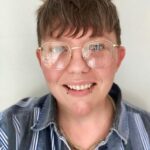
Throughout my life, I have struggled with anxiety, chronic pain, and OCD. For the last 20 years, I’ve had a passion for mental health and have worked in roles supporting people with disabilities or mental health diagnoses. I went to school for writing, but it’s been a huge part of my life since I was young. Writing allows me to cope with my trauma and process my feelings.
As a queer, nonbinary individual, I take great pride in sharing LGBTQIA+ experiences through my writing for MHA Screening. This platform allows me to educate parents, family, and friends on important topics like gender identity and dysphoria, as well as challenges like being misgendered, deadnamed, or treated unfairly for living authentically. I address these issues from my lived experience and knowledge of intersectionality. Every part of our community matters and deserves to see themselves represented. And in a time when our community is being erased from history, I am proud to speak out and honored to have the platform to do so.
Dr. Geralyn Dexter, PhD, LMHC, Writer

As an anxious kid, writing was my refuge. Throughout my life, pen and paper have been the tools that have helped me view my anxiety as more than a foe. Writing has been a haven where I’ve learned to meet myself with compassion, acceptance, care, and patience. Cultivating a better understanding of my own mind (an ongoing process) influenced my desire to help others.
I began writing about mental health professionally in 2013. My goal has always been for readers to see a piece of themselves reflected in a way that makes them feel seen, curious about themselves, and empowered. Writing about mental health has felt like the perfect complement to my work as a licensed therapist, researcher, and psychology faculty member. Writing for MHA has allowed me to use my voice to connect with others by sharing insights rooted in lived experience, clinical knowledge, and the evidence base. It brings me joy to know that my words may find and comfort someone in their moment of need.
Danielle Fritze, Vice President of Public Education and Design
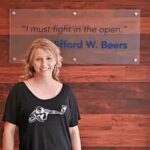
I’m a mother, a dog-lover, a Baltimore native, and a fan of 80s and 90s pop culture. Mental health and substance use conditions run in my family, and I personally deal with panic disorder, depression, and ADHD. When I was younger, I felt weird and alone about how mental health affected me and those around me, but the more people I talk to, the more I realize just how many others are like me. I joined MHA in 2004 and hope that the work I’ve done here over the years has helped people feel less alone, more hopeful, and motivated to get help.
Lanee Higgins, Senior Content Writer for Mental Health America

I’ve been a chronic worrywart and overthinker since childhood, which led me to a love of writing—journaling, poetry, fiction, and nonfiction writing—to express myself and cope with my depression and anxiety symptoms. I’ve also struggled with suicidal thoughts, intergenerational trauma, and PTSD symptoms. Addressing my mental health challenges has empowered me to share my story and live authentically.
The power of storytelling has been a common thread throughout my career as an English teacher, author, and content writer for MHA Screening and other platforms. Someone sharing their story with me saved my life, so centering the lived experiences of real people makes me proud of the work that I do at Mental Health America.
Donna Rose Houchen
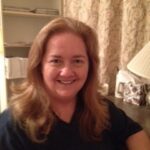
An over-achiever most of my life, I finally found a work-life balance that is more suited to my needs. I love writing and public speaking and reaching out to others with kindness and compassion. I have a family history of bipolar struggles and got it under control through Kaiser doctors. I am deeply committed to ending the stigma of mental health issues. Being bipolar changed my life- for the better. I became more authentic and dedicated to helping others.
Writing for Mental Health America has been a blessing in my life. Being able to share stories and advice has truly been a highlight of my writing career. I have learned that the most difficult circumstances of our lives can be just the thing that shines a light on the best in us. My faith and family are central to me, and my 3 grandchildren bring great joy. Life is good!
Haley Hougardy

I’m a copywriter and digital strategist who works with mission-driven organizations to craft strategies and stories that inspire connection and action. My work has centered on climate, accessibility, gender equity, and education, but I’ve always felt a strong passion for community mental health. Studying psychology and navigating my own mental health journey in therapy has taught me how powerful it is to feel heard and how important it is to create spaces where we can all feel seen and supported. Outside of work, I enjoy small daily practices that keep me grounded and inspired, like reading, painting, and taking care of my plants.
Stephanie Jackson
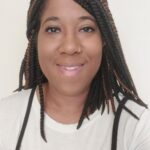
I hold a master’s in library and information science from San José State University and a BFA in English with a concentration in Creative Writing and a minor in Music from Hollins University. I spent eight years working in public libraries, where I developed programming to engage patrons of all ages, with a strong focus on teens and initiatives around art, STEM, and mental health.
After being diagnosed with depression and anxiety in 2016, I became a mental health advocate, focusing on the African American community, bringing awareness to informational needs, gaps, and barriers. My experiences deeply inform my creative work, which centers on mental health awareness through both writing and art.
My writing has appeared in San Jose Student Journal, Roller Rag Magazine, The Mighty, DG Sentinel, and Chicken Soup for the Soul: Thanks to My Mom, among others. My visual art has been featured in Open Minds Quarterly.
Khendra Lucas

My journey with mental health is deeply tied to my upbringing and identity. I learned early the pressure to “just keep going” despite a lack of resources. Though I was a model student, issues with ADHD, self-image, and anxiety left lasting marks on my self-esteem and mental health. My advocacy was born out of compassion for others that I desperately sought for myself. Sometimes recovery starts with the simple transformative act of asking, “How are you doing?”
Currently, I work in HR. Before this, I worked in the nonprofit sector for several years, and three of those with MHA to help pioneer innovative, research-driven approaches to mental health care and advocacy. Through my years of nonprofit work, I’ve learned that change starts with elevating the voices of the most vulnerable. Every day, I make it my mission to empower others with similar struggles to cultivate their own communities and forge a path to wellness.
Mellissa Nesting
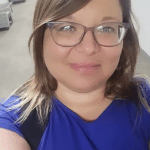
My life has had its share of ups and downs, including struggles with homelessness, mental health, and addiction. But those experiences have shaped who I am today and given me a heart full of empathy and compassion for others who are facing challenges of their own.
I love spending time with my family, reading, going to the gym, volunteering, being outdoors, traveling, and growing in my faith through church. These are the things that keep me grounded and bring me joy.
When I first started writing articles for this site, I didn’t have any writing experience at all. Since then, I’ve come a long way. I’ve become a certified peer coach, earned my associate’s degree in human services, and I’m now working on a double major in human services and addiction counseling. I also work as an advocate at a low-barrier shelter, where I get to walk alongside others who are going through hard times. My journey hasn’t been easy, but I’m grateful for it because it allows me to connect with people in a real and meaningful way. I am also able to show compassion and empathy to the people I work with.
Theresa Nguyen, Chief Research Officer for Mental Health America
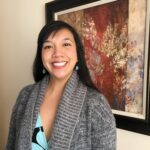
I’m the Chief Research Officer for Mental Health America. I started working at MHA in 2005 with our affiliates in California after falling in love with our commitment to lived experience first. I have personally struggled with panic and anxiety attacks, complex PTSD, suicidal thoughts, depression, alcoholism and other addiction. My family history and work history also includes psychosis, grief, and complex intergenerational trauma. I went into social work because I wanted to work in community mental health.
At my core, I believe Knowledge is Power (thank you, Francis Bacon). I love that our work gives everyone the knowledge they need to have power in their lives. I love cheese and bologna – it’s gross and basic – but oddly comforting. My hobbies are puzzling and doing anything in nature.
Rachel J. Oliveras
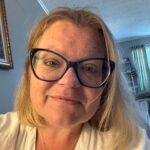
I am just me. A person in recovery. I am a person living with mental health and substance abuse challenges, in recovery for 20 years. I have had my fair share of ups and downs, but I am still here! I plan on living my best life! I’m also a Certified Peer Specialist-Mental Health and a Certified Peer Specialist-Parent.
I started writing music, poetry, and short stories when I was in third grade, and I just soared in language arts testing and writing. I knew I had a talent, especially when my late grandmother, (I called her Nana), told me I would be a writer one day. Sure enough, I was given the opportunity to write for Mental Health America, and it’s something I will never forget. If you feel the urge to write, just go for it! What’s the worst that can happen?
Justina Petrullo
As long as I can remember, I’ve been a sensitive person with big feelings, which led to multiple mental health struggles throughout childhood and young adulthood until I learned what a strength this is. Through these experiences, I found one of my passions in advocacy and mental health education: sharing with others the message that they are not a burden, and they are not broken.
I regularly practice yoga to protect and enhance my mental health through the mind-body connection, and to remind myself that I don’t have to be perfect at something in order to enjoy it! I’ve had the pleasure to write for Mental Health America, work as a contributing author, an associate editor, a digital content assistant, and a research assistant, before discovering my current positions of Prevention Consultant and Outreach Coordinator. In addition to yoga, I also love to be outside and to pet as many dogs as possible!
Heather Rossman

My name is Heather Rossman, and I am a New York State Certified Recovery Peer Advocate and Certified Peer Specialist with over 20 years of lived recovery experience. I operate a small face-painting business alongside my peer work, honoring my early love of art and creativity. I am completing a Bachelor of Science in Psychology to expand my professional capacity and strengthen my contributions to the recovery field.
My personal journey through trauma, addiction, depression, PTSD, and PMDD has shaped a lifelong commitment to supporting others in their healing. I most recently served with Mental Health America National, providing trauma-informed, peer-driven support to individuals nationwide.
Through lived experience, I have learned that it is never too late to begin again, that seeking support is essential, and that the desire to feel good is not a crime—what matters is finding healthy ways and supportive companions along the journey.
Kevin Rushton, Director of Digital Solutions, Mental Health America

Throughout my life, I’ve dealt with symptoms of anxiety, ADHD, depression, and OCD. I believe labels like these can really help us understand our experiences and find solutions… At the same time, it’s too easy to define ourselves by labels and get hung up on who is “allowed” to use them. We all exist on a spectrum of mental health, and our experiences shift over time.
I’ve been a part of MHA since 2019. Before that, I taught classes at a women’s addiction treatment center in Salt Lake City. I’ve always been a curious person, and I love having the opportunity to learn about my own mental health while also sharing what I’ve learned with other people who can hopefully benefit from it.
 English
  Español